Linear Motion Products for Precise, Controlled Movement
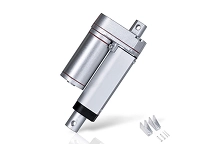
Linear motion products help machinery move loads along a straight path with controlled direction, speed, and positioning. Common examples include linear guides, rails, carriages, shafts, bushings, ball screws, lead screws, and linear actuators. These components are used in equipment ranging from compact desktop machines to industrial automation systems. Choosing a suitable solution starts with understanding the required travel distance, load, movement speed, positioning accuracy, and operating environment. A guide rail and carriage support and direct motion, while a screw drive converts rotary movement into linear travel. Actuators can combine a drive mechanism and housing into a ready-to-integrate assembly. System design also considers mounting space, expected duty cycle, noise, and whether movement must be manual or powered. Matching each component to its role helps create reliable, repeatable motion.
- Supports straight-line movement and positioning
- Includes guides, drives, shafts, and actuators
- Selection depends on load, travel, and accuracy
Types of Linear Guides, Bearings, and Drives
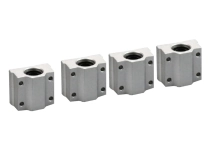
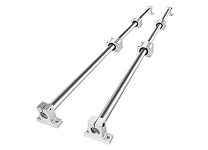
Linear motion systems include several product types designed for different loads and movement requirements. Profile rail guides use a rail and recirculating ball or roller carriage to provide smooth travel and support loads from multiple directions. Linear shafts paired with ball bushings or plain bearings offer another approach, often used in simpler assemblies. Ball screws are suited to applications requiring efficient power transmission and precise positioning; lead screws can be a practical choice where speed, load, or positioning demands differ. Belt-driven stages can provide longer travel and higher movement speeds, while linear actuators package a drive with a guided or unguided moving element. Brands such as THK, HIWIN, Bosch Rexroth, and SKF are associated with components across the linear motion field. Compare product type, dimensions, and performance specifications rather than relying on a category label alone.
- Profile rails guide carriages under multidirectional loads
- Ball screws and lead screws transmit drive motion
- Shaft guides, belt stages, and actuators suit varied designs
Key Components, Materials, and Performance Features
A linear assembly may combine rails, carriages, bearing blocks, shafts, bushings, screws, nuts, couplings, supports, and a motor or actuator. Key specifications include rail or shaft size, carriage length, dynamic and static load ratings, allowable moment loads, travel, speed, and repeatability. Preload can reduce clearance and improve rigidity, while bearing type affects friction, noise, and load capacity. Steel is common in high-load guides and drive components; aluminum may help reduce system weight, and polymer bearing materials can suit applications where lubrication needs or corrosion resistance matter. Seals and scrapers help limit contamination around exposed guideways. Some products include lubrication ports or require periodic greasing. Check the manufacturer's dimensional drawings, mounting-hole pattern, shaft tolerance, and stated operating conditions before combining parts, since similar-looking components are not necessarily interchangeable.
- Review dimensions, load ratings, speed, and repeatability
- Preload, seals, and lubrication affect performance
- Confirm mounting details and component compatibility
Applications and System Compatibility
Linear motion components are found in CNC routers, 3D printers, packaging equipment, laboratory instruments, inspection systems, robotics, and automated assembly machinery. Each application places different demands on travel length, acceleration, rigidity, precision, and resistance to dust or moisture. A small printer axis may use compact rails or shafts, while a machine tool may need rigid profile guides and a correctly sized screw drive. Compatibility involves more than matching rail width: consider carriage type, mounting orientation, screw lead, motor coupling, support bearings, controller, and available installation clearance. For an existing machine, identify the original part number and measure critical dimensions before selecting a replacement. Ubuy can help shoppers discover international linear motion products and compare component descriptions for different project needs. Use technical drawings and product specifications to verify suitability, especially when combining a guide, drive, and actuator from separate product ranges.
- Used in automation, robotics, printers, and machine tools
- Match guides and drives to the operating load and motion
- Check dimensions, motor interfaces, and installation space
Installation, Lubrication, and Routine Maintenance
Correct installation supports smooth travel and helps prevent premature wear. Mount rails on clean, flat surfaces, follow the specified fastener sequence, and avoid forcing a carriage across misaligned sections. Shafts, guide blocks, and screw supports should be aligned with the machine structure and drive components. Follow the product maker's guidance for lubrication type, quantity, and service interval; requirements vary by bearing and operating conditions. Remove chips, dust, and other debris that could enter exposed raceways, and inspect seals, wipers, fasteners, and lubrication points during routine checks. Unusual noise, rising friction, looseness, or inconsistent positioning can indicate contamination, misalignment, insufficient lubrication, or wear. Avoid applying generic lubricants or cleaning agents without checking material compatibility. For replacement parts, compare the full specification and mounting dimensions, not just the apparent fit, and consult the manufacturer's documentation when a component's condition or service needs are unclear.
- Align and mount components according to specifications
- Keep guideways clean and follow lubrication guidance
- Investigate noise, friction, or positioning changes
Select the Right linear motion products
Start by defining the load, direction of force, travel distance, speed, positioning accuracy, and duty cycle required by the machine. Then compare suitable guide and drive types, checking rated loads, moment capacity, stiffness, friction, and allowable operating conditions. Confirm the rail profile, carriage dimensions, shaft diameter, screw lead, mounting pattern, and motor or coupling interface against the design. Consider the environment: dust, moisture, temperature, and available space can influence seals, materials, and maintenance needs. For a replacement, use the existing part number and measurements to reduce the risk of a mismatch; for a new build, review component drawings together as a complete system. Ubuy provides a place to discover international linear motion products while evaluating product details for your application. Read specifications carefully and select components that work together, rather than choosing solely by price or a broad product description.
- Define motion, load, environment, and accuracy needs
- Verify complete dimensions and drive interfaces
- Compare specifications across the assembled system